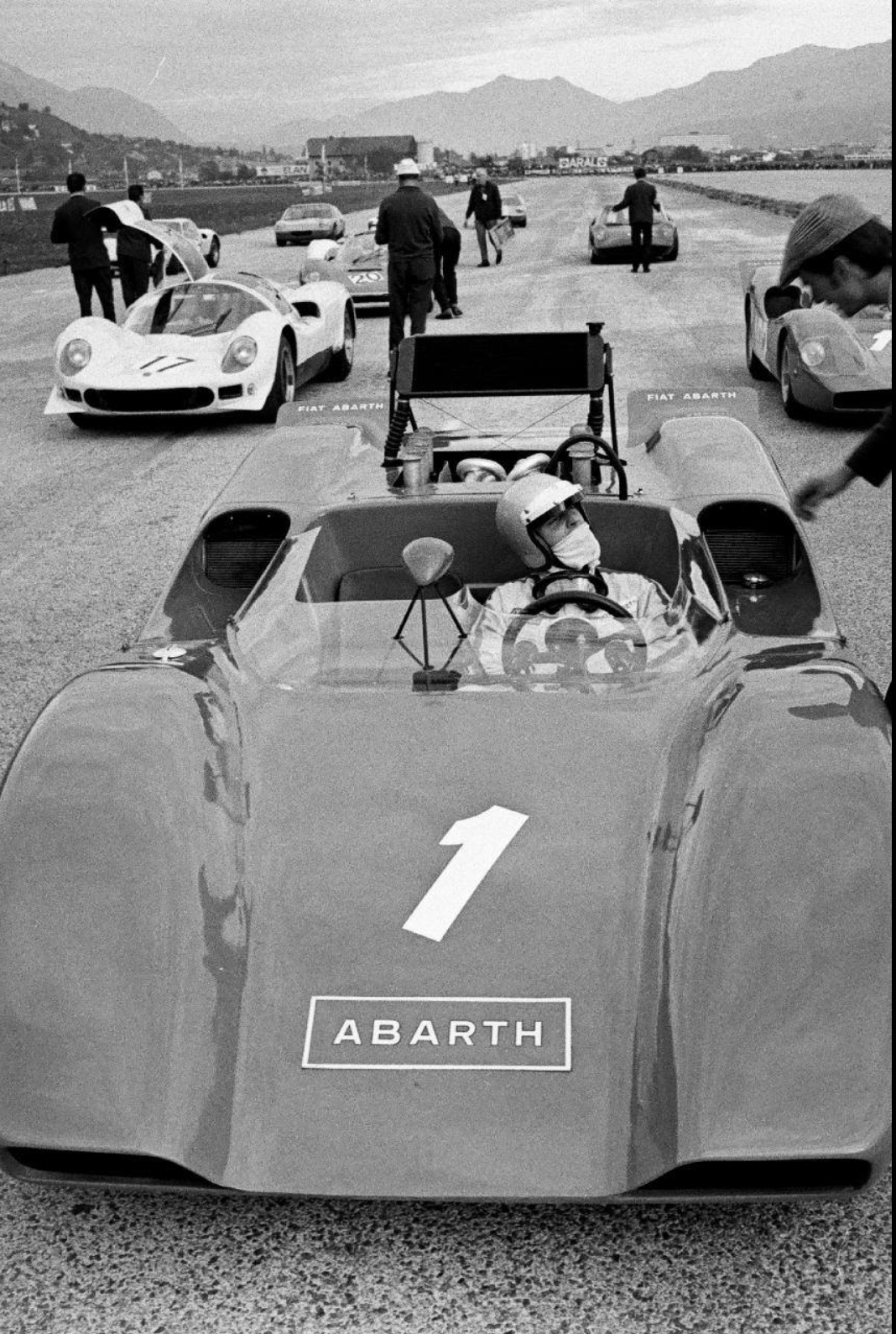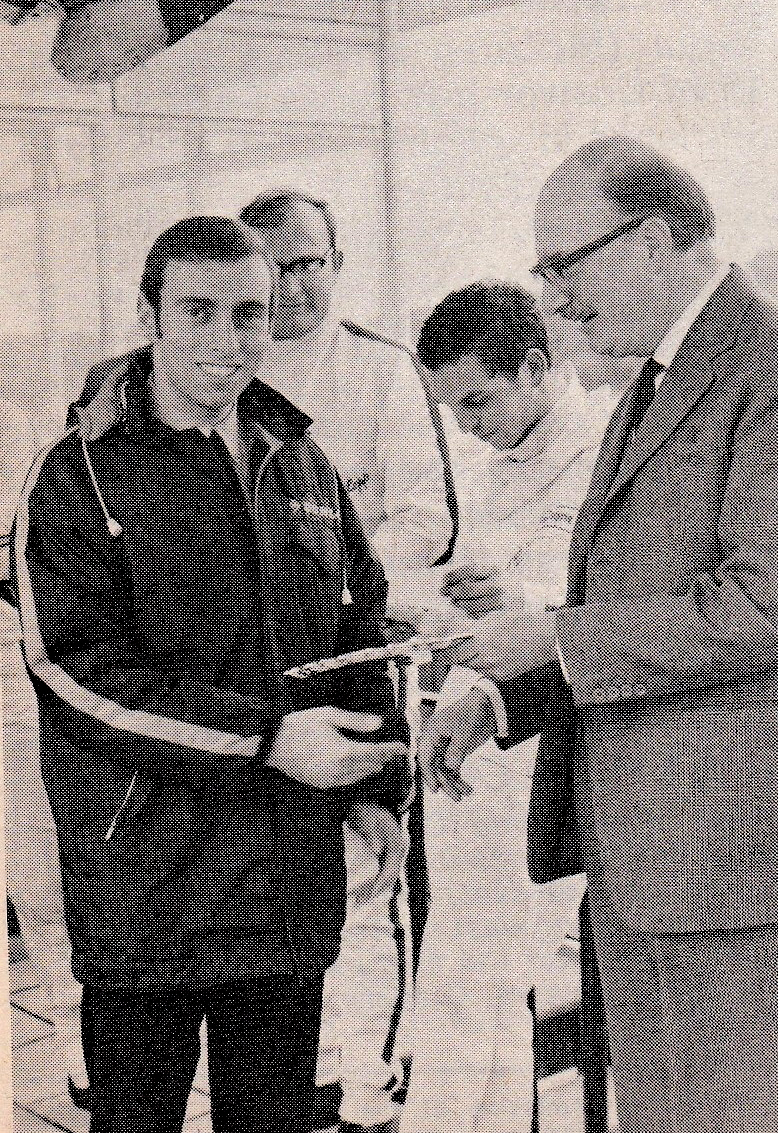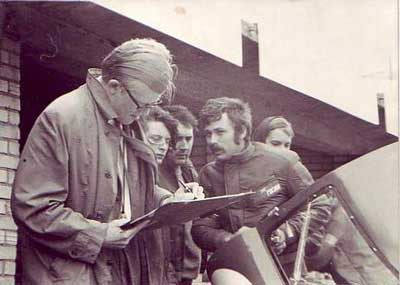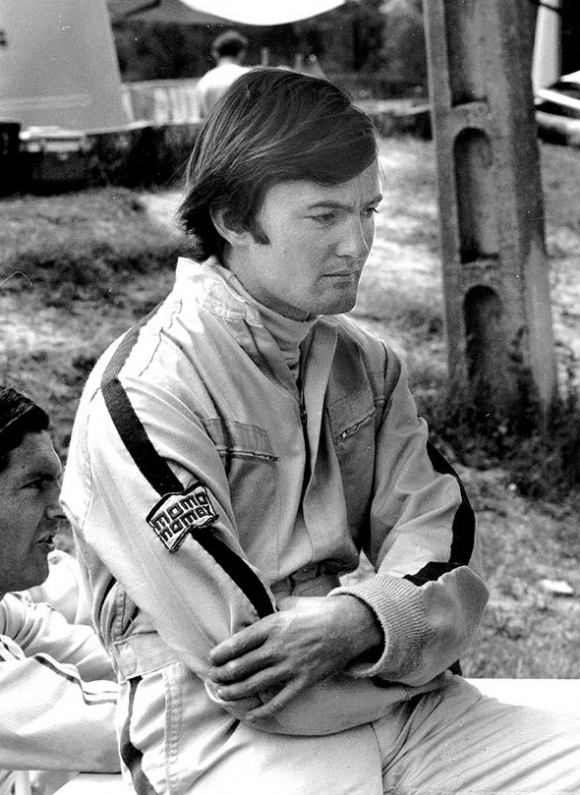
This is an article from the late Jonathan Williams; this was during his time at Le Mans (plus his involvement with the Steve McQueen movie). It’s a long piece but is great, entertaining article by a very pleasant, friendly guy.
“Forty years ago, when I was living in my favourite city, Rome, I received an telephone call from Andrew Ferguson. Andrew had been Team Manager for Lotus and was now involved in driver recruitment. He wanted to know if I was free to drive a Porsche 908 at Le Mans in a few months’ time with Herbert Linge, and later on be one of the groups of drivers to be employed during the making of a film starring Steve McQueen, which would be a fictitious re-enactment of the famous 24 hour epic. The terms offered were excellent, so I readily agreed and a contract arrived in the post shortly afterwards.
It would be an unusual assignment. The car I was to drive was the same Porsche 908 which Steve and Pete Revson had taken to second place at Sebring, but now modified to carry three heavy cameras, one facing forwards, two pointing rearwards, which, as I later found out, had a significantly deleterious effect on the handling of the car. Curiously, later on, when I got to know Steve, he never wanted to discuss the car with me, although it had been part of what could be described as a totally unexpected motor racing triumph, for a man who was foremost a film star, and who had raced with one foot in a plaster cast as a result of a motor cycle accident. Also, although we were in the race, there would be no question of racing for position, our job was to stay on the track, and bring back as much live film footage as possible. In truth, I was fortunate to have been offered the drive at all, on two counts. Firstly, Steve had wanted to drive the car himself, but his Film Studio’s insurance were horrified by the thought of their valuable asset risking his life in this way, and put an absolute veto on that plan. Secondly, the Automobile Club de l’Ouest didn’t like the idea of having a camera car in the race one bit, and only allowed us to start after considerable argument by the film’s backer, Solar Productions, and numerous technical inspections.
A few days before the race, I flew to Paris, and then made my way to Le Mans, met Herbert and the film crew, and settled in. We were briefed about the filming requirements which were to run all the cameras continuously from just before the start, until the film was exhausted, stop to reload (it was faster to change the cameras which had quick release mounts, than to change film reels) and carry on, now filming selectively. The cameras were controlled by three switches in the car, located on the right hand side, near the gear lever, and had individual coloured lights to show if they were “running”, “off”, or “out of film”.
The first lap was hugely important, as the complete grid of cars, and the grandstands full of spectators would be impossible to replicate in later filming. To be certain that this happened, a Solar technician was placed next to the car to switch them on, in case Herbert, who had been chosen to start, forgot to in the heat of the moment. Filming during the race would be at the discretion of the driver and would contain shots of the leaders in their Porsche 917’s and Ferrari 512’s coming up from behind, and drawing away in front, runs through the lighted start finish area, night and day, entering and leaving the pits, and anything of interest, such as accidents to other cars.
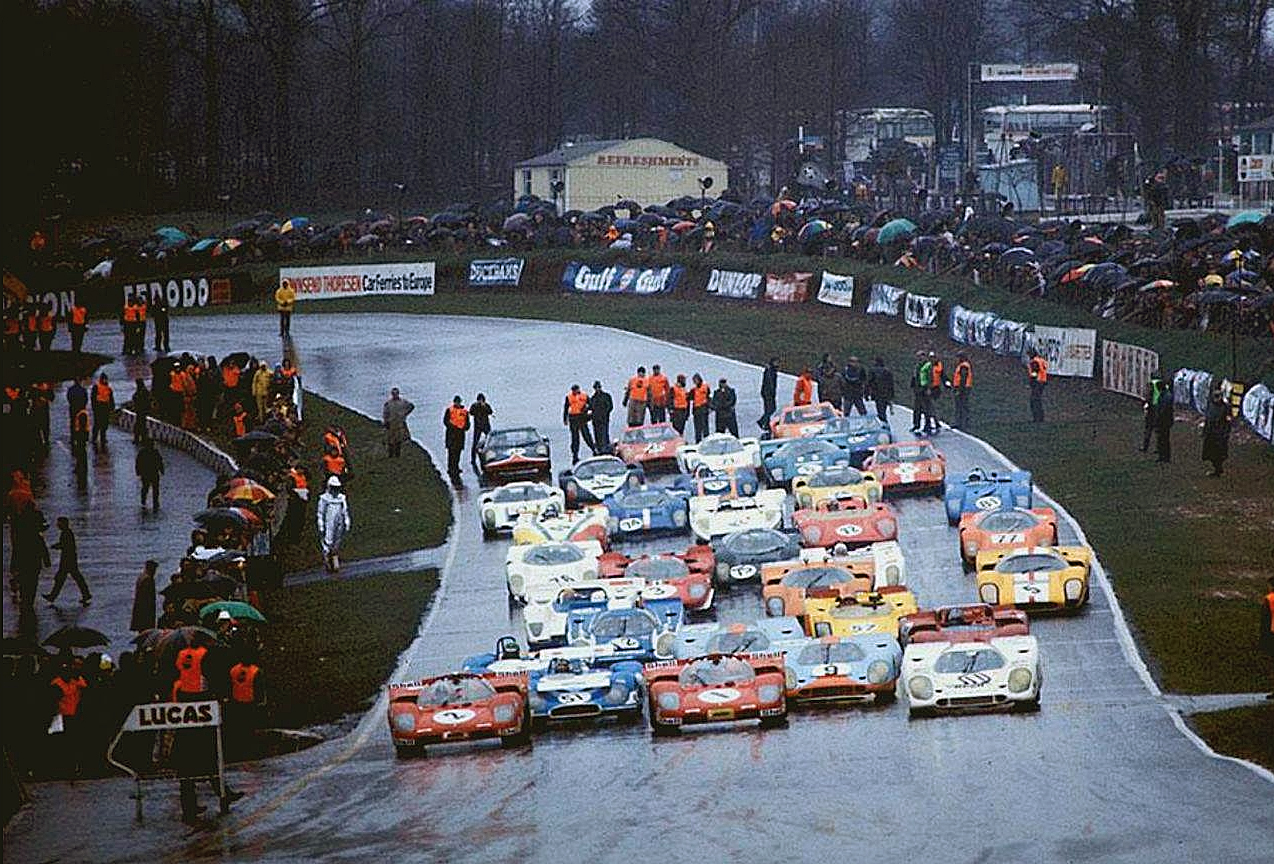
It will be remembered that the traditional start entailed the drivers running across the track at the drop of the flag, getting in the car, doing up their seat belts, starting the engine, and then getting going. This year for the first time, for safety, the drivers sat in their cars with the engines off, and started after the flag dropped. The track was dry, although later it would rain a lot, and to the great relief of the Solar crew, Herbert got away without trouble and pitted for new cameras as planned at the end of lap two. He continued like this with the pit stops becoming more spaced out, as new filming opportunities became less plentiful. After a couple of hours, I took over, and continued the work. It required a lot of concentration in the rear view mirrors, as with the random stops, it was nearly impossible to know where one was in track position with respect to the fast traffic, whereas in a usual racing situation one’s mental picture of events around the track was usually reliable. Later on, it started to rain, which continued through the night, at times heavily, making conditions treacherous. Sometime after midnight, while I was at the wheel, the car aquaplaned after the Dunlop bridge and without me being able to do anything about it, struck the Armco barrier quite gently on the left side of the track, regained grip, and I carried on. I stopped at the pits for an inspection of the damage which proved to be very minor, so I continued my stint. This was a great relief, as if the car had stopped then, the integrity of the whole film would have been compromised, but it does serve to illustrate that even with all the care in the world, luck is still a factor.
It is a personal thing, but I never enjoyed long distance racing, as the need to conserve the car means that one almost never drives at one hundred percent, so that the pure thrill of racing on the limit, the true reason to do it, if one is honest, is absent. In this case, the rain also made life uncomfortable. There was a small caravan parked in the paddock where we could rest between driving stints, which was cramped and cold, and with no soundproofing sleep was impossible. I remember sitting there alone in the dark, shivering in my damp overalls, with nothing to do until it was my turn to go out again. At the end of the race the little Porsche was still running perfectly, and we found we had finished ninth, despite all the time lost changing cameras. Then we all went our separate ways for a few weeks, waiting to be recalled for the start of filming, little knowing that there was high drama going on behind the scenes between Steve McQueen, Solar Productions, and the Hollywood moguls.
When we returned to Le Mans to start filming we found that an impressive number of genuine racing cars had been assembled, at enormous expense, by Solar Productions. There were Ferrari 512s, Porsche 917s, Matras, Alfa 33s, and so on. SolarVillage had been constructed inside the circuit, comprising administrative offices, canteen, special effects, rooms for the scriptwriters, shower block etc. The cars were kept outside the circuit in various garages, the major one being in the town of Arnage, and were driven in by the mechanics for filming with a police escort. The actual filming took place on separate sections of the track, which would later be joined up on film, and were conducted at close to racing speed. This was to reproduce the feeling of total reality which Steve McQueen was determined to capture, but this made it hazardous. This fact was brutally brought home near the end of filming when David Piper lost control of a 917 he was driving, at White House corner, probably as a result of a slow puncture. The car was destroyed, and David suffering the loss of his right leg. Another dangerous time was when simulated rain was needed, and a tanker released enormous amounts on the track just before running the cars. The visual results were perfect but driving was very tricky. We performed overtaking manoeuvres on cue, and minor off road activity. For spins, and the like, Dutch “skid” expert, Rob Slotemaker was used in a variety of cars, and paid a bonus for his expertise. In the film, there was to be one big crash scene where a Ferrari 512 leaves the track, and gets airborne, before landing and bursting into flames. Too much even for Rob, so a Lola T70 was clothed in Ferrari bodywork and steered by radio control with a dummy driver inside. The first test was a disaster, with the operator losing control and severely damaging the car, but the next attempt went off perfectly, as can be seen it the finished film. I was greatly impressed by the Hollywood technicians, there was no problem for which they couldn’t find a solution, in fact they seemed to relish a challenge.
There were a few permanent drivers of whom I was one, plus Mike Parkes and Masten Gregory. Others came and went, according to their race schedules, including Derek Bell, Richard Attwood, Brian Redman, Gerard Larrousse, Jean Pierre Jabouille, Jacky Ickx, to name a few; many others took part. We filmed from Monday till Friday, and had the weekends free to go to Paris or home. Mike Parkes and I usually went further afield in his twin engined aircraft, usually in the company of a couple of pretty girls, selected from the many that seemed to frequent the film set. Life, it is fair to say, was good. I stayed in the beautiful Chateau de Segrais, not far from the circuit, and drove to work in a Porsche 911 on loan from the factory. Usually I had breakfast there, overlooking the moat, with the film’s director, the great John Sturgess who was responsible for making Steve’s reputation with epic films like “The Great Escape”. For me, it was a great privilege to share the company of this physically and intellectually big man. Sadly, as Steve’s obsession with making the perfect motor racing film grew out of control, to the extent that work was stopped, as there was no script because Steve couldn’t find the perfect one, and the project was close to being abandoned, he packed his bags, got on a plane and went home, refusing to be part of the shambles that Steve’s mania was causing. Lee Katzin, a journeyman TV director was shipped in to finish the film fast, and with a minimum of spending. Admired by nobody, he did a pretty good job in very difficult circumstances.
Over the years, I have often been asked what it was like to work with Steve, a huge Hollywood star, and a household name to people around the globe. Was I in awe of him at all? The truthful answer is no, and this is because the level of egocentricity required to become a successful racing driver, or a top level athlete in any discipline, excludes any such sentiment. If anything, the opposite was true. Steve did all his own driving in the film, in “his” Gulf Porsche 917, not an easy car by any means, the only actor to do so, and he desperately wanted to be accepted by the “real” drivers. He needn’t have worried, as we realised at once that here was someone who could drive at our level without taking any risks, you could trust him completely not to do anything foolish. Of course, this was no surprise, as he was a natural athlete, and a top level competition biker. That was his real passion, and he had several machines flown in from the States for him to play with during his free time. There is no doubt that, had he chosen to do so, he could have made a living as a race driver. Although, at the end of the day’s filming we went our separate ways, I did get to talk to him quite a lot. My impression is of an uncomplicated man, without a huge amount of academic baggage, highly intelligent, nonetheless, hugely charismatic, living somewhat uncomfortably with the trappings of fame. It is a great shame he had to die so young.
With all the politics, filming went on far longer than initially planned, and the leaves were falling from the trees alongside the Mulsanne straight by the time it was wrapped up, and we all finally went home. It was a fascinating experience for me and, I expect, for all the others who were there, so long ago. Despite poor reviews when it came out, the film has gone on to be a cult favourite, generally accepted as by far the best motor racing film ever made. Steve would be happy about that.
3rd Dec. 2017.
Just got this from John Amette…..
Hello Barrie, a Very Happy New Year to you both. Yes 1967 was a tough year, I finished working for AlRoy Team Merlyn looking after two F3 cars, early in the season, a shortage of funds predicated that. I then went to work for Charles Lucas, looking after Ford GT40 #1001. Charlie was a very nice young man, but needed someone to ‘manage’ him. He was quick, but crashed everything he drove, which made taking care of cars difficult. The only one he never crashed was the 250 F Maserati. After that I started to work for David, with dear old John McDonnell. I first met Jonathan Williams with David, close to Modena, at Count Volpi’s Scuderia Serenissima, in 1969. Alf Francis had designed a 3 litre V8, which they put into an M2B McLaren, and Jonathan drove it. I think the engine was more Carlo Chiti, than Francis, but it was quite nice. Alf was trying to get David to buy one. When I worked on the Le Mans film, I got to talk to lots of drivers, as we stood around endlessly. Every night they sent a ‘film’ car to Paris. The films were developed overnight and brought back in the morning. On a couple of weekends I got a lift in the film car and then flew home. Came back on Monday and went to work. On one flight I sat next to Jonathan. We had a great conversation about the film, racing and the inherent dangers. He was incredibly interesting, and of course had driven some great cars. Jonathan had a pilot’s license, so he explained a lot to me, in a very subtle sarcastic way. Time flies, but always nice to think about those ‘old days’. Best Regards, John.